



The Deepbridge Crucible: Forging Creative Intellects
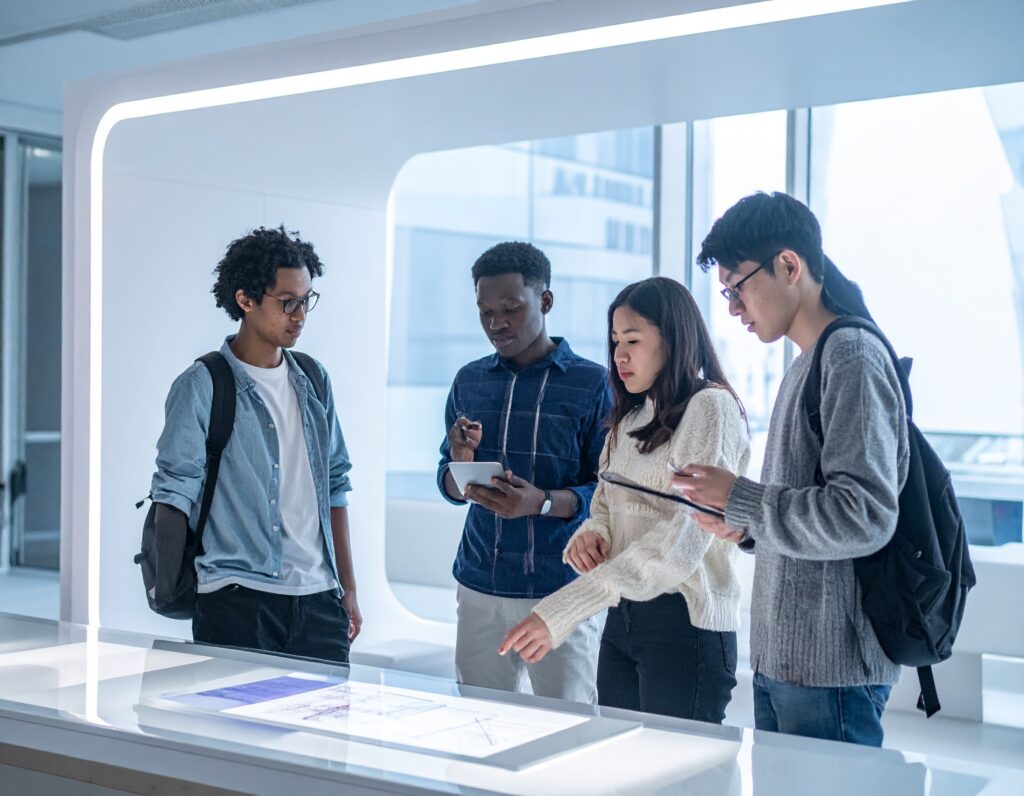
The word ‘crucible’ denotes a vessel where diverse elements are subjected to immense pressure, melting and merging to form something new, refined, and powerful. At the British School of Deepbridge, our entire educational environment is conceived as such a crucible. It is an intense, dynamic, and profoundly supportive space designed to forge resilient, agile, and sophisticated intellects. We intentionally create a challenging academic and creative atmosphere where students are pushed beyond their comfort zones. It is here, at the edge of their existing capabilities, that true growth occurs. We believe that intellectual and creative character is not simply taught; it is forged through the sustained effort of grappling with complex problems, defending nascent ideas, and collaborating under pressure.
Our curriculum is the catalyst within this crucible. We reject the siloed approach to education where subjects exist in isolation. Instead, we have engineered an integrated ‘Interdisciplinary Core’ where lines between disciplines are deliberately blurred. A history unit on the Industrial Revolution, for instance, is not merely a study of dates and events. It becomes a comprehensive investigation that involves designing and 3D-printing a working steam engine component (Design & Engineering), analysing the period’s literature to understand its social impact (English Literature), composing a piece of music reflecting the era’s mechanical rhythms (Sonic Arts), and critically examining the paintings of Turner to decode artistic responses to industrialisation (Visual Culture). This method forces students to think synthetically, to apply methodologies from one field to another, and to appreciate the intricate interconnectedness of all knowledge. This is where true, transferable critical thinking is born.
The Studio as Laboratory, The Critique as Catalyst
Within the crucible, our studios, workshops, and performance spaces function as laboratories for radical experimentation. They are safe havens for ambitious failures and unexpected breakthroughs. We encourage students to take risks, to test the unconventional, and to pursue lines of inquiry that may not have a predetermined outcome. This freedom is balanced with immense rigour. The central pedagogical tool in our artistic specialisms is the ‘critique’ or ‘crit’. This is a structured, formal process where students present their work-in-progress to a panel of faculty and peers for intensive feedback. The crit is not a judgement, but a diagnostic conversation. It teaches students to articulate their conceptual intentions with precision, to defend their aesthetic choices with intellectual rigour, and, most importantly, to listen to and integrate constructive criticism. This process is challenging but transformative, building not only the quality of their work but also their intellectual resilience and professional communication skills.
This intense internal environment is constantly enriched by external pressures and influences through our Global Exposure Programme. We ensure our students do not learn in a vacuum. We actively bring the world’s leading creative and intellectual practitioners to them through a curated series of masterclasses, artist-in-residence programmes, and virtual collaborations with our partner institutions across the globe. Our students may find themselves in a workshop with a Pulitzer Prize-winning playwright one week, and collaborating on a design brief with a Tokyo-based media lab the next. This constant influx of external expertise ensures our crucible remains heated, relevant, and connected to the global pulse of innovation, preparing students to step confidently onto the world stage.